Cross-Platform Bonus Structures and Seasonal User Activity Spikes in Virtual Gaming Environments Across Time Zones
Written by Mia Otto · Aug 25, 2026
Cross-Platform Bonus Structures and Seasonal User Activity Spikes in Virtual Gaming Environments Across Time Zones
Virtual gaming platforms have expanded rapidly in recent years, and operators now design bonus structures that respond directly to documented patterns of user engagement. Seasonal spikes occur during holidays, major sporting events, and regional festivals, while time zone differences create staggered peaks that affect when bonuses deliver maximum impact. Cross-platform systems allow simultaneous adjustments on mobile applications, desktop clients, and console interfaces so that rewards remain synchronized with real-time activity data.
Seasonal Activity Patterns in Global Gaming Markets
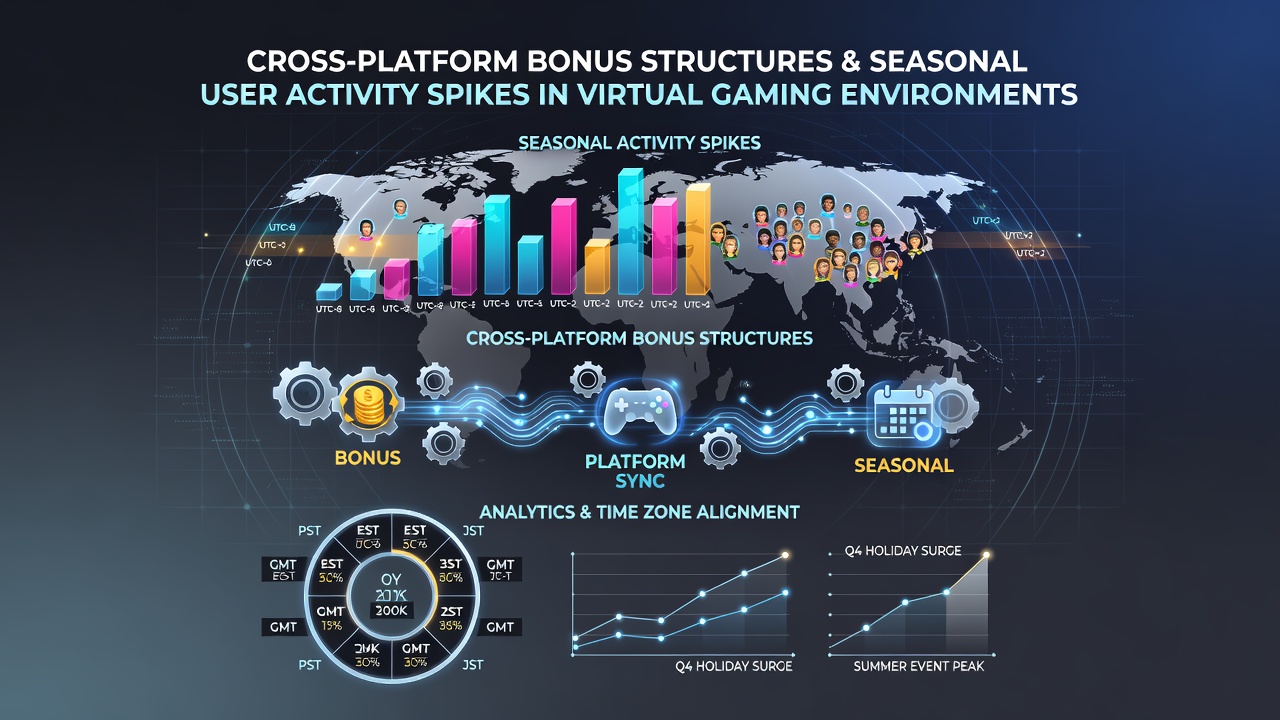
Researchers tracking user logs across multiple platforms have identified recurring surges tied to calendar events. Summer periods often show elevated participation in regions experiencing school breaks, whereas winter holidays drive separate increases in markets where family gatherings coincide with online access. Data collected through 2025 and into August 2026 indicates that activity levels in the Asia-Pacific segment rise sharply around regional harvest festivals, while European markets register comparable jumps during national holiday weekends.
These patterns vary by platform type. Mobile sessions tend to lengthen during commute hours in urban centers, whereas desktop usage climbs in evening windows after work schedules end. Operators adjust bonus availability accordingly, releasing deposit matches or free-play credits at times when historical logs show the highest concurrent logins.
Time Zone Coordination and Bonus Timing
Platforms serving users across multiple continents must account for offsets that stretch from UTC-8 to UTC+12. A bonus launched at 20:00 in one zone reaches peak eligibility windows in another zone several hours later, creating a rolling distribution effect. System logs reveal that staggered releases maintain consistent engagement rather than concentrating all rewards in a single geographic window.
August 2026 records show operators deploying time-zone-specific multipliers during back-to-school campaigns, with mobile notifications timed to morning hours in North American markets and evening slots in Australian regions. Such coordination relies on centralized servers that update eligibility rules without requiring separate code branches for each region.
Cross-Platform Alignment Mechanisms
Modern gaming environments integrate bonus engines that function identically whether a user accesses the service through a smartphone application or a desktop browser. This uniformity allows a single seasonal promotion to apply across devices while still incorporating platform-specific triggers, such as touch-screen gestures on mobile or keyboard shortcuts on desktop. Transaction data from 2025 demonstrates that users who switch between devices during a single session maintain eligibility for the same reward tiers when the underlying system tracks progress centrally.

Operators achieve this synchronization through shared user profiles that update in real time. When activity spikes appear in one time zone, the system automatically extends eligibility windows for connected accounts in lagging zones, preventing premature expiration of offers. Industry reports from the American Gaming Association document how these mechanisms have reduced drop-off rates between initial login and reward claim during multi-day festival periods.
Data Sources and Regional Comparisons
Comparative studies conducted by the UNLV International Gaming Institute examined transaction volumes across North American and Asian servers during overlapping seasonal windows. Findings indicate that bonus structures calibrated to local time zones produced higher redemption rates than uniform global releases. Separate analysis from Gambling Research Australia tracked mobile versus desktop engagement during the same calendar events and found parallel increases when rewards were released in staggered sequences rather than simultaneous drops.
These observations align with broader patterns reported by regulatory bodies in multiple jurisdictions, where operators submit aggregated activity metrics that confirm seasonal alignment improves retention metrics without altering underlying game mathematics. The approach remains consistent across licensed markets because bonus parameters must still comply with jurisdictional spending limits and disclosure rules.
Conclusion
Cross-platform bonus structures now incorporate granular timing controls that respond to documented seasonal activity spikes while respecting time zone variations. Operators rely on centralized data systems to maintain consistency across devices, and regional comparisons confirm measurable differences in engagement when timing aligns with local usage peaks. Continued collection of activity logs through periods such as August 2026 will further refine these alignments as platforms expand into additional markets.