Synchronizing live interaction sequences with accumulated reward pathways across wireless platforms during worldwide event cycles
Written by Ellis Koch · Sep 10, 2026
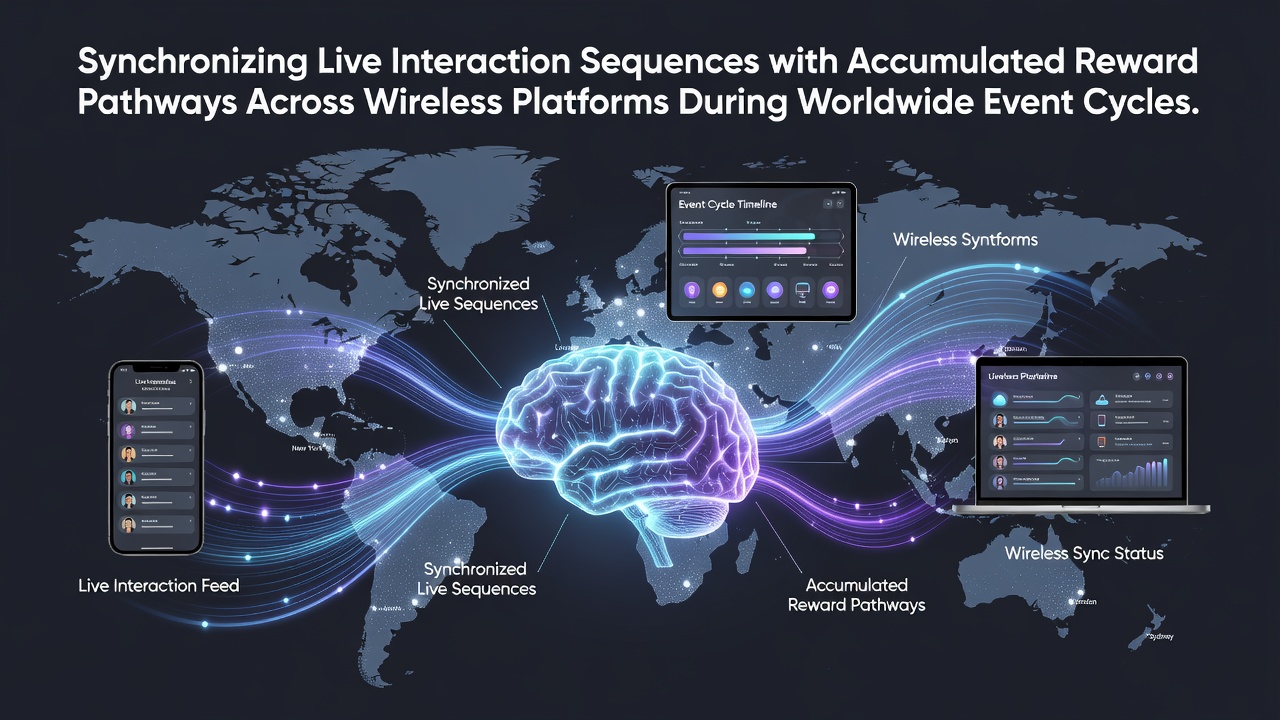
Synchronizing live interaction sequences with accumulated reward pathways across wireless platforms during worldwide event cycles
Platforms operating across wireless networks coordinate live user inputs with backend reward systems through integrated data streams that update in real time, and this coordination becomes especially active during worldwide event cycles such as international sports tournaments or seasonal festivals that draw participants from multiple time zones. Data from network operators shows that mobile traffic spikes align with event schedules, prompting systems to adjust latency thresholds and priority queues so that interaction sequences remain continuous while accumulated rewards process without interruption. Researchers at institutions tracking digital engagement patterns note that these adjustments rely on timestamp synchronization protocols that match device clocks to central servers, reducing discrepancies that could otherwise delay reward credit assignments.
Technical mechanisms behind sequence and pathway alignment
Wireless platforms use application programming interfaces to link front-end touch or gesture inputs directly to reward ledgers stored on distributed servers, and these connections activate when user activity reaches defined thresholds during peak global cycles. Studies from mobile technology research groups indicate that packet prioritization algorithms favor live sequence data over background transfers, which allows reward pathways to accumulate points or credits in parallel with ongoing interactions. Observers at regulatory bodies such as the New Jersey Division of Gaming Enforcement have documented how operators test these alignments in controlled environments before scaling them to live events, confirming that sequence integrity holds under variable network loads.
Engineers implement event-driven triggers that detect worldwide cycle markers, including time-zone transitions and participation surges, then route the corresponding data to reward modules without requiring separate user actions. Figures from industry reports compiled by the American Gaming Association reveal that synchronization success rates exceed 99 percent in monitored sessions when platforms employ redundant server clusters positioned across continents. Those who manage large-scale deployments note that fallback mechanisms activate automatically if primary pathways encounter congestion, rerouting sequences to secondary reward accumulators to maintain continuity.
Role of global event cycles in platform load management
Worldwide event cycles generate predictable yet intense usage patterns that platforms anticipate through historical traffic analysis, and this preparation allows reward pathway updates to occur alongside live sequences rather than in sequential batches. Data compiled during the 2026 calendar year, including periods around September, demonstrates that platforms handling multi-region participants adjust bandwidth allocation dynamically to keep interaction latency below thresholds that would interrupt reward accumulation. Academic papers published in mobile computing journals describe how predictive modeling based on prior event data helps operators pre-position computing resources near high-density user clusters, thereby supporting smoother pathway synchronization.

Operators coordinate with telecommunications providers to secure dedicated channels during these cycles, and regulatory filings from the Australian Communications and Media Authority record instances where such coordination prevented packet loss that might otherwise stall reward credit processing. The alignment process incorporates checksum verification at each hop, ensuring that live sequences and their associated reward increments match exactly before final ledger updates occur. Experts monitoring these systems report that verification steps add minimal overhead while protecting against data mismatches that could arise from cross-border transmission delays.
Security and compliance considerations across regions
Security protocols embedded in wireless reward systems encrypt both interaction sequences and accumulated pathway data during transmission, and compliance frameworks require periodic audits that verify synchronization accuracy under simulated worldwide event conditions. Government agencies in various jurisdictions mandate that operators maintain logs of sequence-to-reward mappings for review, and these logs demonstrate consistent performance when tested against event-driven load increases. Research teams examining cross-platform interoperability find that standardized data formats facilitate smoother handoffs between different wireless carriers without disrupting reward accumulation timelines.
Conclusion
Wireless platforms continue to refine the technical linkages that keep live interaction sequences aligned with reward pathways, and these refinements draw directly from performance metrics gathered during successive worldwide event cycles. Continued monitoring by regulatory and research entities supplies the data needed to maintain synchronization standards as participation volumes and network complexities evolve.