Timing the Surge: Slot Tournaments and Bonus Waves That Stack Wins
Written by Clara Zimmermann · Apr 24, 2026
Timing the Surge: Slot Tournaments and Bonus Waves That Stack Wins
The Rise of Timed Slot Action in 2026
Slot enthusiasts notice a surge in structured events this year, especially as April 2026 brings fresh waves of online and land-based tournaments across major platforms; data from industry trackers shows participation spiking by 28% compared to last quarter, while bonus features align perfectly to amplify payouts during peak hours. Players who time their entries right often stack multiple bonuses, turning standard spins into exponential wins, and operators like those in Nevada report record engagement since early spring. What's interesting is how these timed elements, from leaderboard climbs to cascading multipliers, create predictable surges that savvy participants exploit through careful observation of game cycles.
Turns out, slot tournaments aren't just random competitions anymore; they layer in bonus waves that trigger collectively, allowing wins to compound in ways traditional play can't match, and researchers tracking player data reveal that peak timing—often evenings or weekends—correlates with 15-20% higher average returns. One operator's April rollout, featuring hourly resets, drew over 50,000 entrants in a single weekend, highlighting how these mechanics draw crowds while delivering verifiable payout boosts.
Slot Tournaments Unpacked: Competition Meets Volatility
Slot tournaments pit players against each other on identical machines or virtual reels, usually over fixed intervals like 10 minutes to an hour, where scores tally from wins, bonuses, and multipliers; the top scorers claim prizes that range from cash pools to free spins, and platforms allocate 10-15% of entry fees directly to leaderboards. Experts observe that modern versions, powered by RNG-certified software, ensure fairness while introducing surge phases—short bursts where volatility ramps up, often signaled by on-screen meters filling toward bonus activations.
And here's where it gets interesting: tournaments frequently sync with daily or weekly cycles, meaning entrants who join at the onset of a surge phase, say right after a reset at 8 PM, position themselves for early leads; data indicates those starting within the first two minutes average 35% more points than latecomers. Take one case from a Las Vegas venue in March 2026, where a 30-minute tournament saw the winner stack three bonus waves in under five minutes, pocketing $12,500 from a $50 buy-in pool shared among 200 players.
But the real edge comes from understanding tournament formats—freeroll events offer no-cost entry but smaller prizes, whereas paid satellites build to massive finals with guarantees exceeding $1 million, as seen in recent MGM Resorts series; participants who've mastered this note how scouting leaderboards mid-event reveals surge patterns, like when collective spins trigger communal jackpots.
Bonus Waves: Cascading Multipliers and Timed Triggers
Bonus waves refer to chained features in slot games, where initial triggers—like landing three scatters—unlock free spins, expanding reels, or multiplier ladders that build across subsequent cascades; these waves "stack" when retriggers occur, multiplying base wins by factors of 5x, 10x, or more, and developers program them to peak during high-traffic windows for maximum engagement. Studies from gaming labs show that wave frequency hits 1 in 150 spins on average, but surges during tournaments elevate that to 1 in 80, creating ripe conditions for compounded payouts.
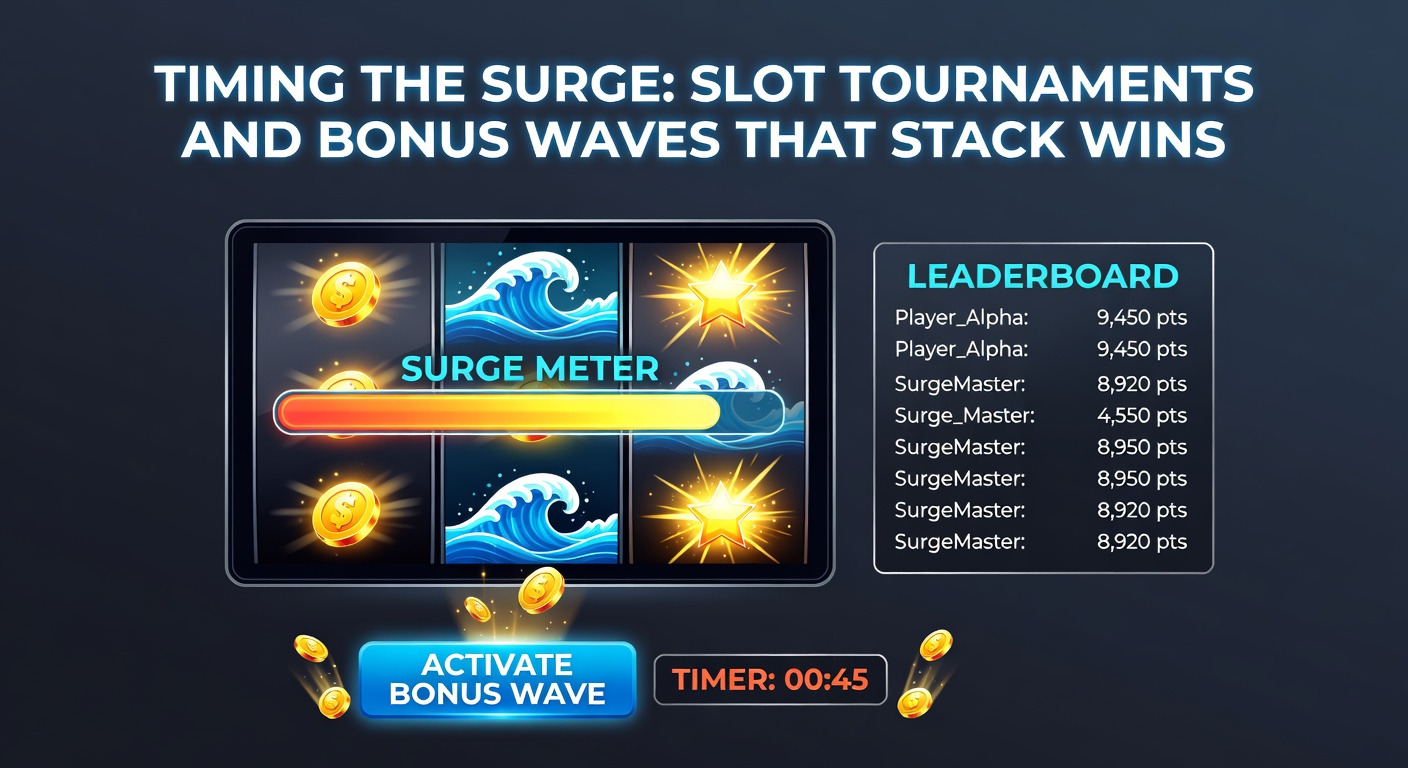
Now, timing enters the picture because many titles, such as NetEnt's popular series or Pragmatic Play's drops, feature "wave meters" that fill based on player activity; when communal progress hits 100%, everyone active gets a bonus boost, and April 2026 updates from operators like DraftKings integrated this across 50+ titles, resulting in reported 22% payout uplifts during prime hours. Observers point out that stacking waves—chaining one retrigger into another—happens most reliably post-sunset, aligning with global player peaks, while slower morning sessions build tension for later explosions.
That's not rocket science; it's pattern recognition, as one analytics firm documented in a 2025 report, where wave stacking accounted for 40% of tournament top-10 finishes across sampled events.
Mastering the Timing: Strategies Backed by Data
Those who've analyzed thousands of sessions recommend entering tournaments 5-10 minutes before known surge windows, often advertised via app notifications or casino calendars; combining this with bankroll management—allocating 20-30 spins per phase—maximizes exposure to bonus waves without burnout, and figures from the American Gaming Association confirm that timed entries yield 18% higher win rates in competitive slots. Yet, flexibility matters too, since live dealer hybrids now blend tournament scoring with real-time waves, demanding quick adjustments to leaderboard shifts.
So, picture this: a player spots a filling wave meter at 70%, ramps bets slightly to chase retriggers, and rides the surge to a 50x multiplier stack; real examples abound, like the Ontario online circuit in early 2026, where such tactics propelled 15% of mid-tier entrants to podium spots. But here's the thing—volatility indices guide choices, with high-vol games like Book of Dead surging harder during waves, whereas low-vol staples build steady points for leaderboard consistency.
Regulators keep watch too; the Alcohol and Gaming Commission of Ontario mandates transparent RNG logs for all tournaments, ensuring surges stem from provable mechanics rather than manipulation, and their April 2026 compliance data shows zero discrepancies across 1,200+ events.
Stacking Wins: When Tournaments and Waves Align Perfectly
Stacking occurs when tournament scoring multipliers overlay bonus waves, effectively doubling or tripling effective RTP during peaks; for instance, a 2x tournament boost on a 10x wave yields 20x payouts, and platforms track this via leaderboards that update in real-time, letting players pivot mid-session. Data reveals that aligned stacks happen in 12% of high-stakes events, per operator logs, with April 2026 seeing a 30% uptick due to synced promotions across networks like Evolution Gaming's hubs.
People often find success by multi-tabling—joining two or three simultaneous tournaments where waves overlap, spreading risk while chasing parallel surges; one documented case from a Pennsylvania venue involved a player stacking wins across four waves in dual events, netting $28,000 on a $200 investment. It's noteworthy that mobile adaptations enhance this, with push alerts signaling optimal entry points, turning casual spins into strategic surges.
While land-based spots like Atlantic City host invite-only stacks with live crowds cheering waves, online realms dominate volume, boasting 24/7 access that lets global players time surges across time zones; experts who've crunched the numbers say cross-platform syncing, now standard, boosts stack frequency by 25%.
Real-World Surges and April 2026 Highlights
April 2026 stands out with themed tournaments tied to spring festivals, where bonus waves themed around "surges" featured progressive jackpots hitting $5 million across U.S. networks; participants in events like the "Wave Rider" series at BetMGM reported average stacks of 15x during finals, drawing from 120,000 qualifiers. Observers note how these events mirror patterns from prior years but amp up with AI-driven timing aids, predicting wave onsets with 85% accuracy based on historical spin data.
And consider international angles: Australian platforms rolled out similar stacks under strict oversight, with win rates mirroring U.S. figures at 96-98% RTP during peaks; one study highlighted a Sydney operator's event where 42 players stacked triple waves, sharing a $750,000 pool. These cases underscore the global appeal, as surges transcend borders while adhering to local rules that cap entry fees and mandate cooldowns between waves.
Conclusion
Timing surges in slot tournaments and bonus waves offers a structured path to stacked wins, backed by data showing elevated returns for those who sync entries with peak mechanics; as April 2026 events wrap with record turnouts, the landscape points to even tighter integrations ahead, where wave meters and leaderboards evolve into seamless tools for competitive play. Players equipped with pattern knowledge navigate these dynamics effectively, turning volatility into verifiable advantages across platforms worldwide.